SIZING FOR A MEDICAL COMPRESSION WEAR IMPORTANCE
How Tight Should a Medical Compression Garment Feel?
This is one of the most common questions patients ask:
“How do I know if it is tight enough?”
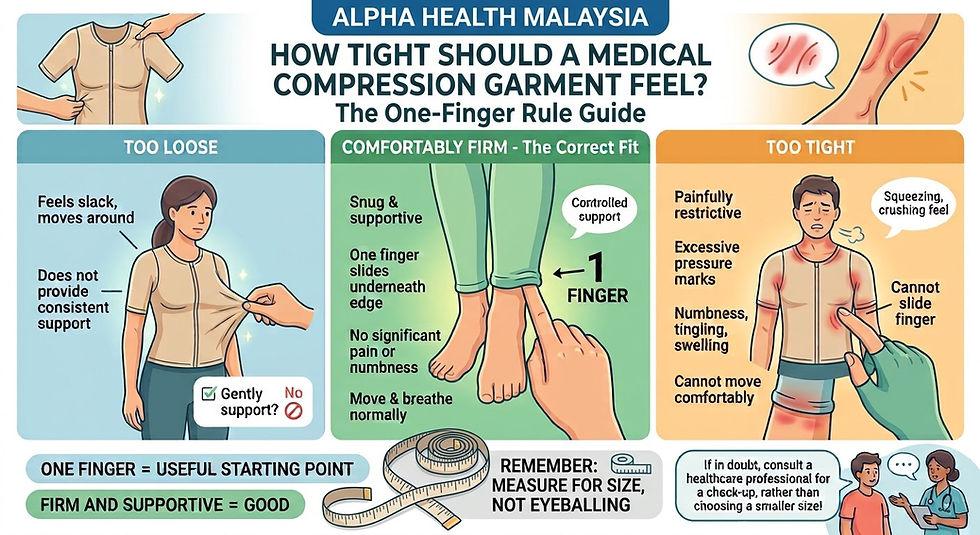
A useful general guide is the one-finger rule. When the garment is properly fitted, you should generally be able to slide one finger comfortably underneath the edge of the garment. It should feel firm and supportive, but not painfully tight or restrictive.
The one-finger rule is a practical guide—not a precise measurement of compression pressure.
Do note however different medical compression garments are designed with different materials, compression levels, panels and constructions. Patients also have different body shapes and different surgical areas:
1. Snug and Supportive — JUST RIGHT
A properly fitted garment should generally feel:
Firm and snug against the body
Evenly supportive rather than painfully tight
Secure without constantly rolling or moving out of position
Comfortable enough to wear for the period recommended by your surgeon
Not interfering with normal breathing or movement
The garment should feel like it is supporting the treated area, rather than squeezing it aggressively.
2. Too Tight — A Warning Sign
The garment may be too tight if you experience:
Significant or increasing pain from the garment itself
Numbness or persistent tingling
Skin becoming unusually cold, pale, bluish or markedly discoloured
Deep pressure marks or areas of skin irritation
The garment cutting into the skin or creating a pronounced “tourniquet” effect
Difficulty breathing or moving normally
These are not signs that the garment is “working better.”
If you experience these problems, speak with your surgeon or the professional who fitted your garment. If there are significant circulation-type changes, severe pain or breathing difficulty, seek medical advice promptly.
3. Too Loose — Also Not Ideal
A garment can also be too loose.
Signs may include:
The garment slides around instead of staying securely in position
Large gaps or areas where the garment is not contacting the body properly
Excessive wrinkling or bunching
Little sense of support or compression
The garment repeatedly rolls or moves away from the treated area
A garment that is too loose may not provide the intended support.
The Simple Patient Test
Instead of asking:
“Can I tolerate something tighter?”
Ask:
“Does the garment feel snug, evenly supportive and comfortable without causing concerning symptoms?”
That is a much better way to think about medical compression.
The goal is not to find the tightest garment you can survive wearing.
The goal is to find the right fit and appropriate compression for your individual recovery.
And remember: your surgeon's instructions and the garment manufacturer's fitting guidance should always take priority over any general rule.
Medical compression is not about maximum pressure. It is about appropriate pressure, in the appropriate places, for the appropriate purpose.
Need Help Choosing the Right Compression Garment?
Choosing the correct medical compression garment is about more than simply selecting the smallest size or the tightest fit. If you are unsure whether your garment is too tight, too loose or properly fitted, speak to your surgeon or a professional medical compression garment supplier.
Alpha Health Malaysia has approximately 40 years of experience supplying medical compression garments for postoperative recovery and can assist with garment selection and fitting guidance.
Contact Alpha Health Malaysia:📞 011-1286 8768
Remember:
The goal is not maximum compression. The goal is the right compression, in the right places, for the right purpose.


Comments